
A solution that could deliver additional capacity during peak periods
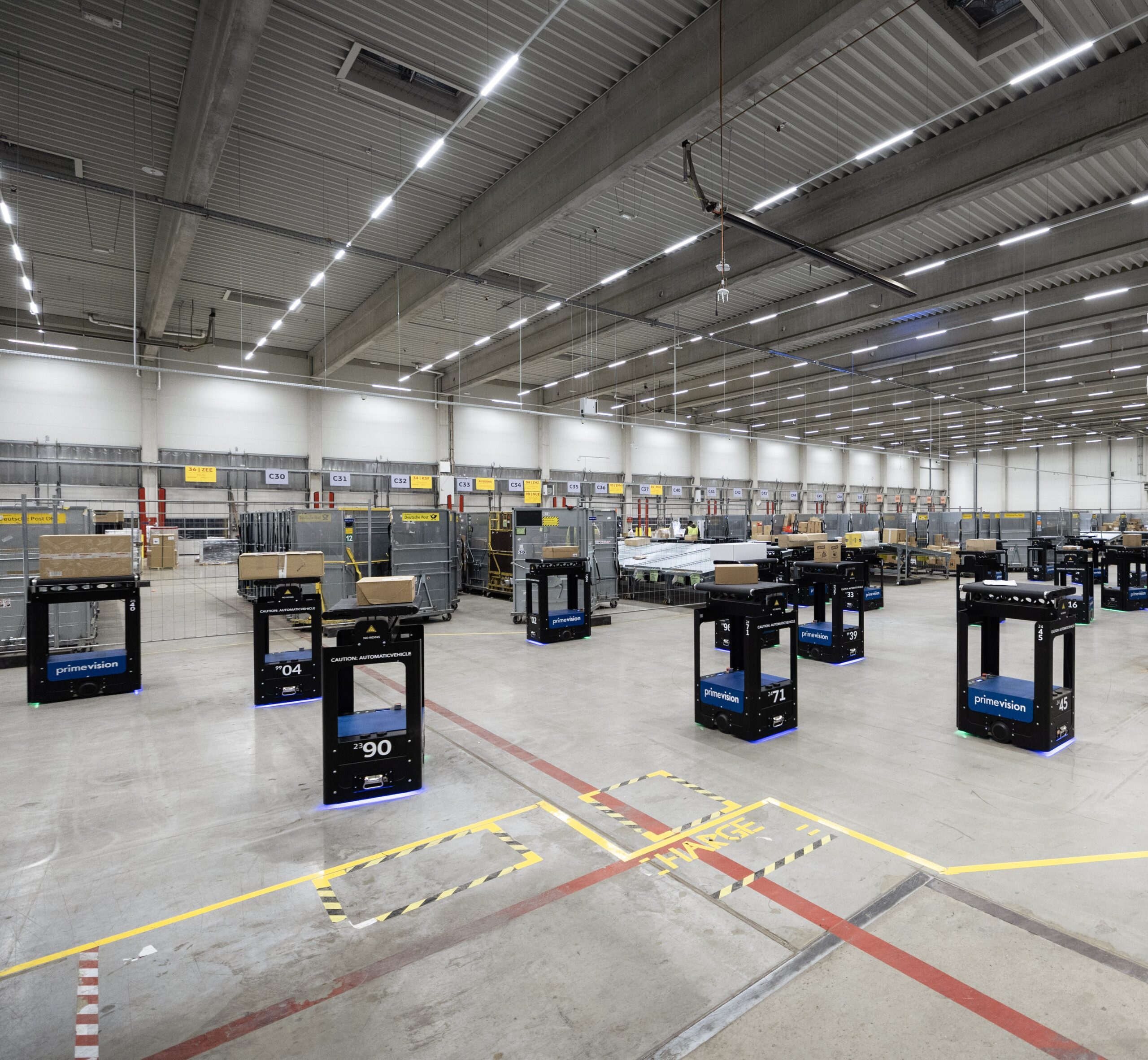
Seasonal peaks are a recurring reality for parcel networks worldwide. Volumes increase sharply during consumer-driven events such as holidays and promotional campaigns. This creates a clear operational challenge: sorting capacity must be available immediately, while remaining flexible once demand decreases. To address this challenge, DHL required a solution that could deliver additional capacity during peak periods without committing to permanent infrastructure.
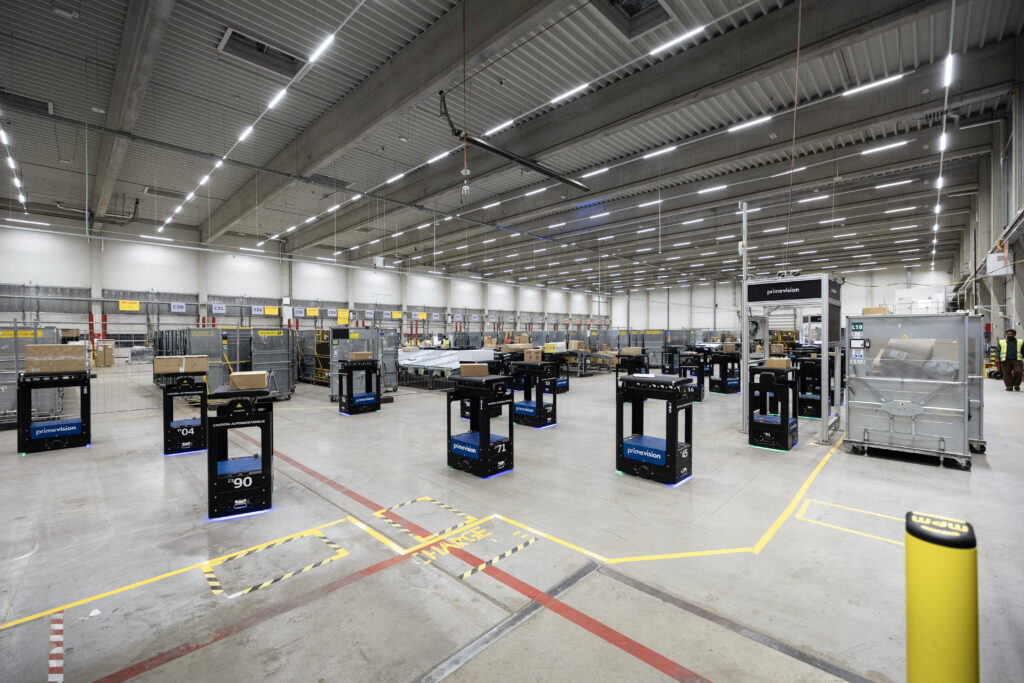
Instead of expanding fixed facilities, a temporary peak sorting operation was established within an existing DHL facility in Germany. This space can be quickly configured for parcel processing during high-demand periods. Within this environment, Prime Vision deployed a fully flexible robotic sorting system specifically designed for peak operations.
During the busiest days, up to 75 robots operate simultaneously, sorting up to 13,000 parcels per shift. Capacity can be scaled up or down easily by adding or removing robots, depending on demand.
The result is straightforward: capacity where it matters, when it matters.
See the robotic sorting solution in action
Flexible robotic sorting designed for temporary operations
The robotic sorting solution combines intelligent software, modular hardware, and advanced vision technology to create a system that performs efficiently without fixed installation.
The system currently operates with 80 sorting destinations. Both the number of robots and sorting destinations can be adjusted depending on operational requirements.
Parcels entering the system are automatically measured and scanned using a compact vision tunnel, ensuring accurate data capture and routing.
Prime Vision handover belts provide automated parcel induction into the robotic sorting process, ensuring controlled and consistent flow into the system.
Unlike traditional automated sorting installations, the entire solution is not fixed to the floor. This makes it particularly well suited for temporary facilities, where rapid deployment and operational flexibility are essential.
From delivery to full operational readiness, the complete system was deployed within two weeks, without requiring construction work or permanent modifications to the facility.
Operational safety is integrated into the system design. Authorized personnel and forklifts can cross the sorting area while the system continues running, preventing unnecessary interruptions.
Supporting DHL’s peak logistics strategy
Parcel networks are repeatedly faced with the seasonal challenge of responding to rapidly increasing demand for sorting capacity. The key lies in being able to provide and implement effective solutions in time for peak periods, such as major holidays and other seasonal spikes.
To address this, DHL has adopted a flexible approach: using temporary facilities combined with robotic sorting to handle the full range of parcel volumes during peak periods.
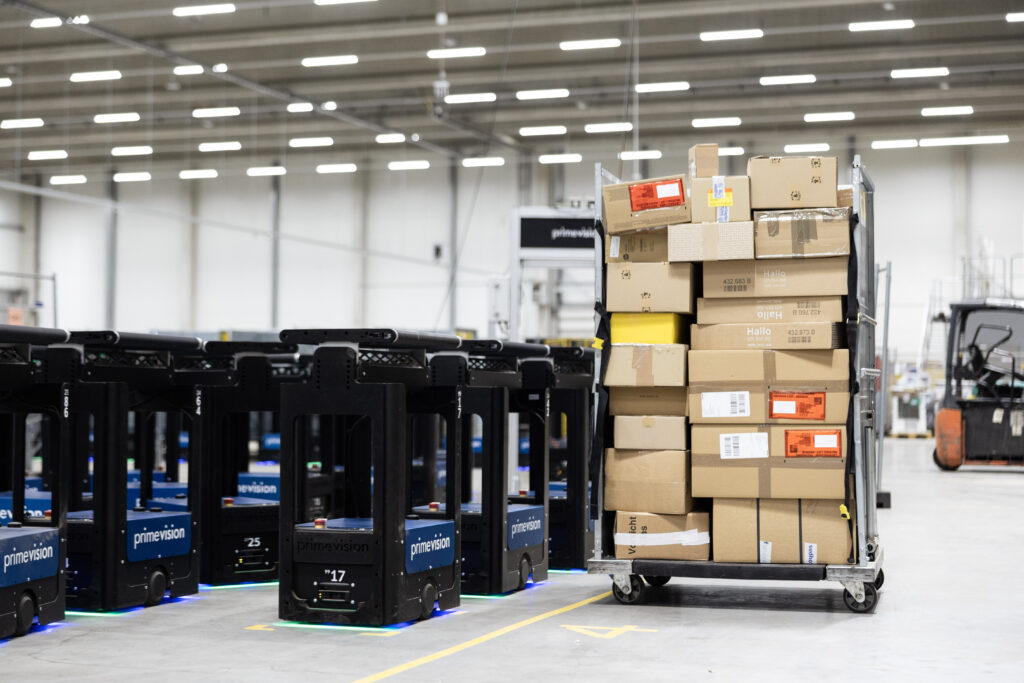
During consumer peak periods, retail customers significantly increase inventory levels to meet seasonal demand. These surges create sharp but temporary increases in parcel volumes, requiring additional capacity that can be deployed quickly and efficiently.
By combining temporary sorting operations with robotic technology, DHL can absorb these volume spikes without expanding permanent infrastructure. The result is a flexible operational model that can respond rapidly to changing demand.
Key benefits include:
- Fast and reliable handling of peak parcel volumes
- High operational flexibility within temporary facilities
- Lower investment requirements through a non-permanent setup
- Consistent service quality during high-pressure peak periods
Unlike traditional automated installations, the robotic solution is not fixed to the floor. This allows for rapid deployment and reconfiguration, making it ideally suited for temporary environments where flexibility is essential.
The solution is also available through a Sorting-as-a-Service model, enabling access to additional capacity without capital investment.
A new approach to peak capacity
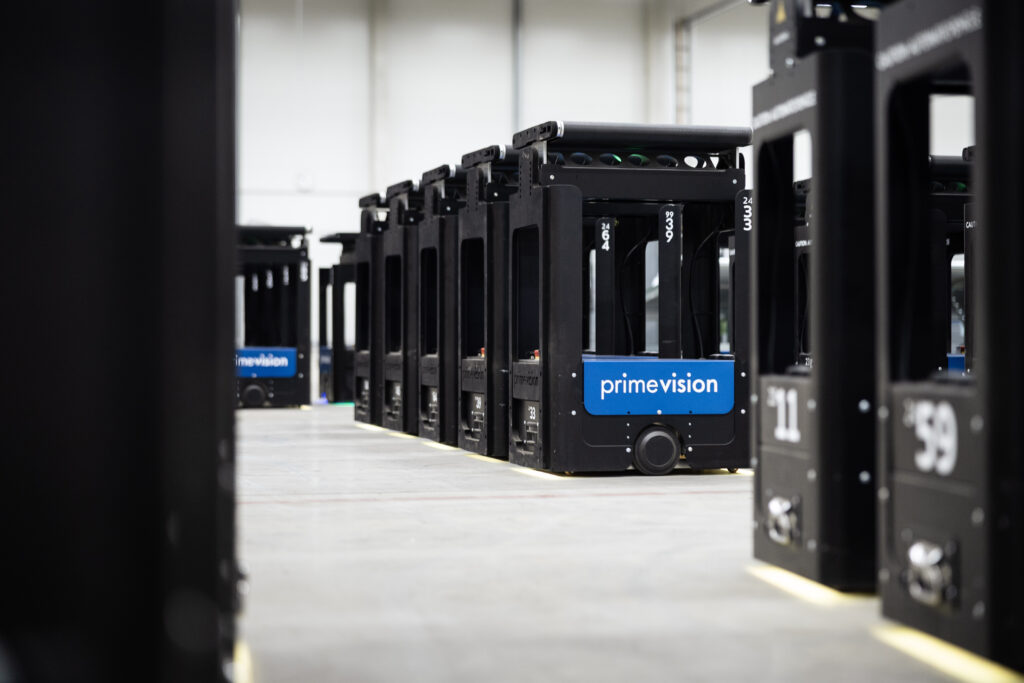
This approach demonstrates how logistics networks can respond to seasonal demand peaks with flexible, rapidly deployable automation. Instead of relying on permanent infrastructure, DHL can activate sorting capacity where it is needed most and scale it down once demand subsides.
In logistics operations where timing is critical, robotic sorting introduces a new model for managing peak capacity; turning peak-season pressure into operational confidence.