Last year, DHL needed additional sorting capacity for its seasonal peak. What followed showed just how quickly flexible automation can move from an idea to a live operation.
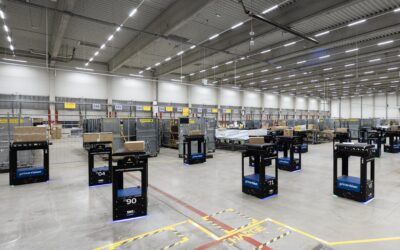
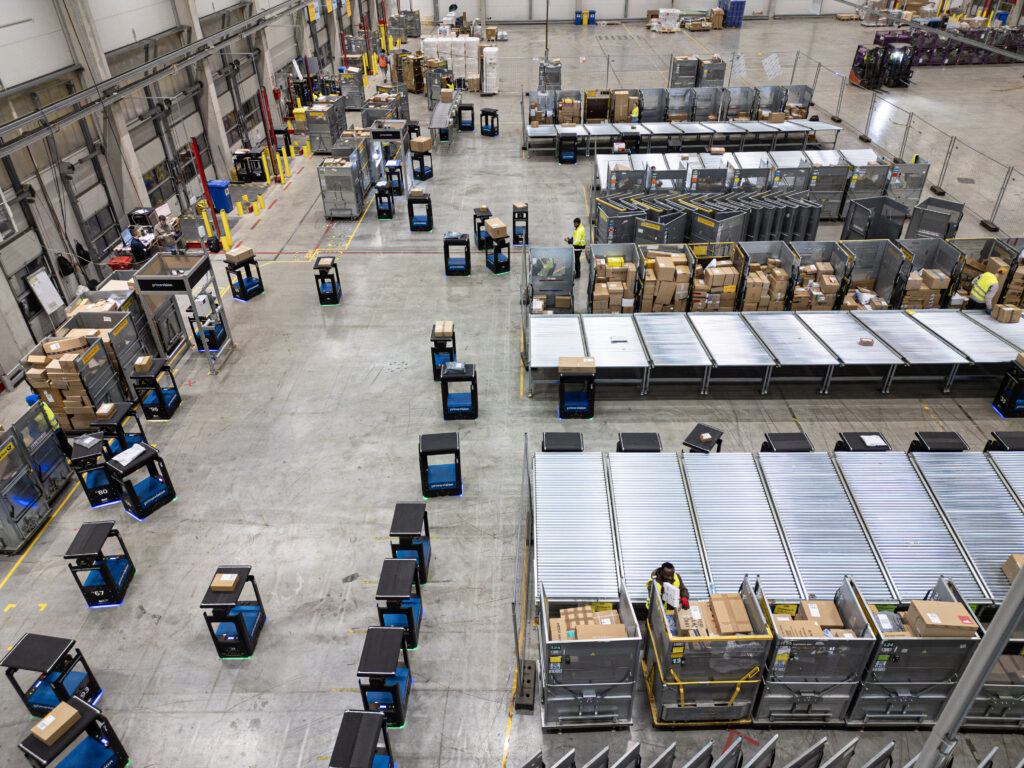
Within only a few weeks from the start of the project, Prime Vision and DHL had turned the plan into reality. Once the equipment arrived on site, the robotic sorting system was built and prepared for operation in a matter of days. The complete solution was operational within two weeks, without construction work or permanent modifications to the facility.
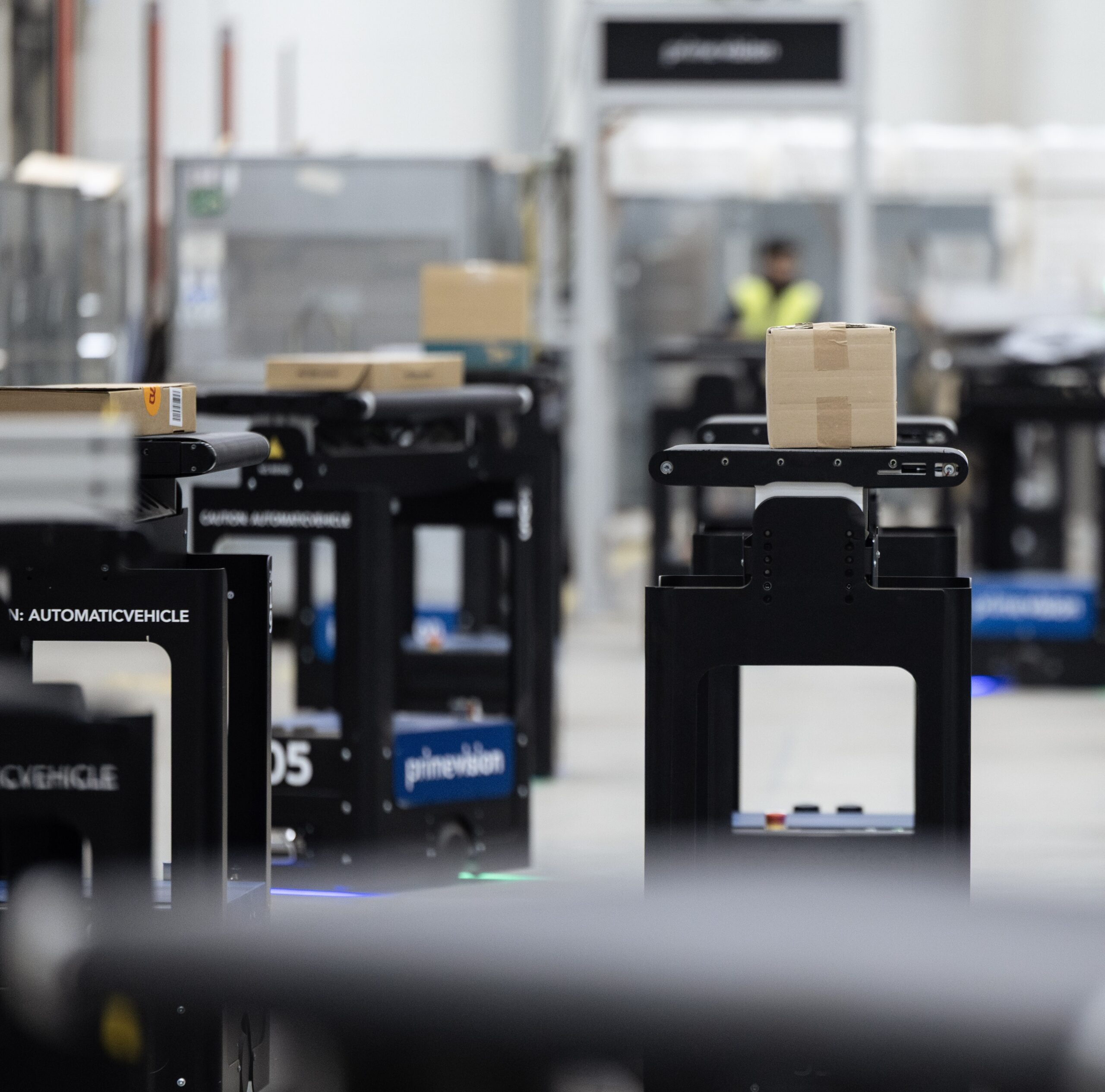
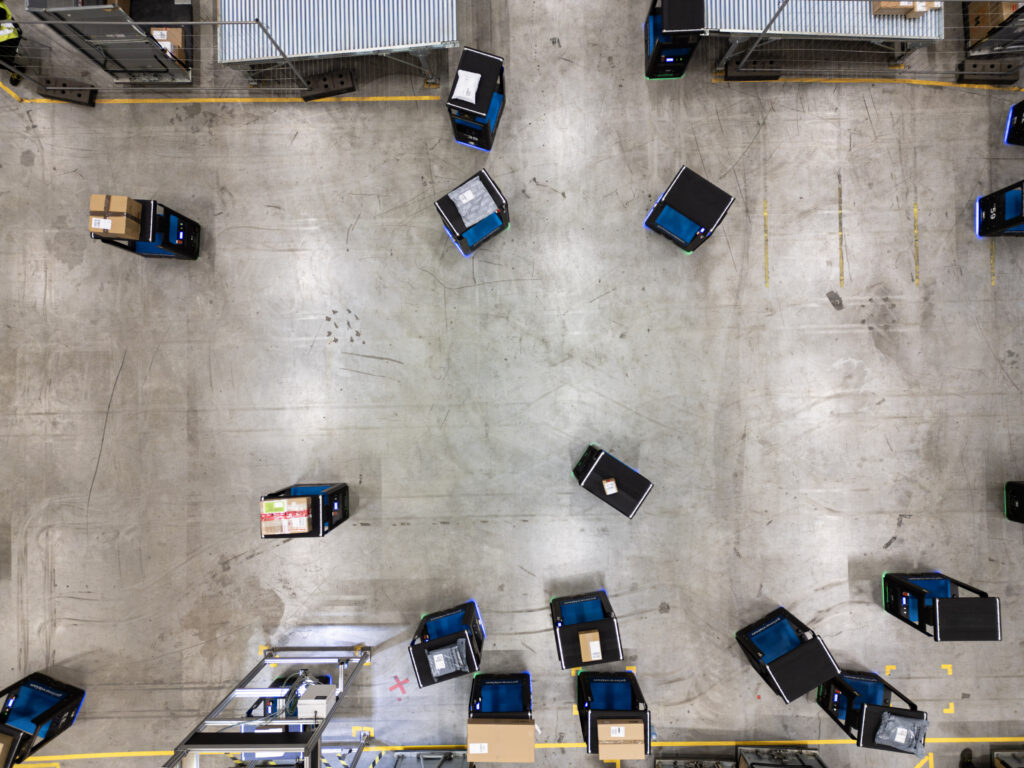
During the busiest days, up to 75 robots worked simultaneously, sorting up to 13,000 parcels per shift across 80 sorting destinations.
Back for the next peak
Following the promising results of last year’s operation, Prime Vision will once again support DHL’s peak sorting operation this year.
For us, however, this is not simply a repeat of last year. Over the past twelve months, our robotics team has continued to develop the technology, focusing on higher throughput, greater autonomy and an increasingly user-friendly operator experience.
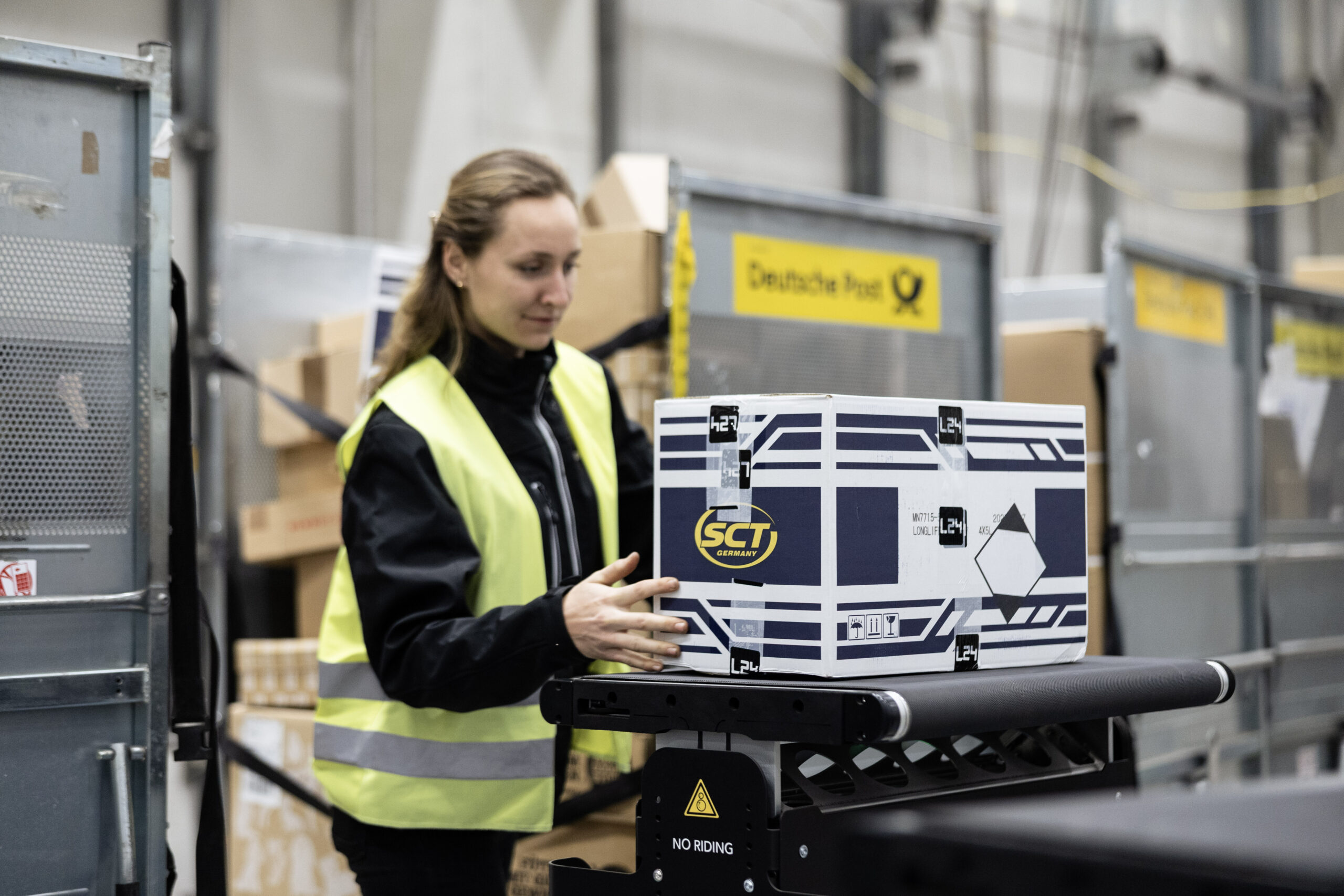
We are now getting close to an important step forward in throughput, while retaining one of the characteristics that makes the solution so flexible: people can still safely move through the robotic sorting area while the system is operating.
Rather than creating a closed-off automation environment, the goal is to combine higher performance with an operation in which people and robots can work safely alongside each other.
From operator knowledge to system intelligence
Last year’s system required operators to be properly trained to manage operational situations and resolve issues. Over the past year, we have been using AI to transfer more and more of that knowledge into the system itself.
Today, approximately 90% of the issues that previously required operator intervention can be resolved by the system itself. This reduces dependency on specialist knowledge, makes operations easier to manage and allows employees to focus on the situations where human judgement really adds value.
Our ambition for the coming twelve months is to develop a robotic sorting system that anyone can operate without specific training or prior knowledge.
Smarter automation changes the economics
Automation is not only about making a machine move faster. Intelligent automation can simplify the entire operation around it. A system that recognizes situations, solves problems itself and requires less specialist knowledge can be easier to deploy, easier to scale and more cost-effective to operate.
Combine that intelligence with a robotic platform that can be installed quickly, scaled according to demand and removed again when a peak is over, and a very different model for parcel sorting emerges.
Last year, the DHL project demonstrated what flexible robotic peak sorting could look like.
This year, we are returning with a smarter system. And what comes next could change the possibilities of flexible sorting even further.